The Importance of Documentation in Pre-Production
How can Documentation make or break a Media project?
What is documentation?
The documentation and logistics of pre-production overlap in many ways with this being the more formatted side of things. There are many different ways of documenting the pre-production phase and so many different aspects of media so here are a few versions of documentation:
Actor’s agreement – the actors agreement makes sure the actor is totally on board with everything they’ll be doing so there are no legal issues or upsets. This format is a concise way of showing everyone involved in a product and it is easy to digest quickly and effectively. It also means you have legal support if an actor backs out last minute, for example, Woody Harrelson was sued for leaving the film Benny and Joon with the rumoured settlement of $500’000.
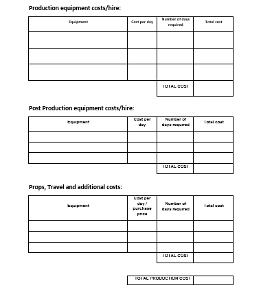
Budget production equipment costs – This ties into the finance side of things with it being an overview of any 3rd party expenditures that is an easy way to calculate budget and work out a possible profit efficiently. As mentioned previously, finance is a vital aspect of pre-production and this documentation keeps it simple.
Contingency plan – This is a more universal piece of documentation across a variety of media products. It’s essentially a plan B that will cover any possible issues or interferences with a shoot. In its rawest form it puts a ‘possible issue’ directly next to a ‘possible solution’ so everyone knows exactly what to do incase of an emergency. For example, poor foresight from The Sun editors victimised the police and villainised the fans of the Hillsborough disaster just to sell papers. Due to a lack of a contingency plan or any common sense the paper’s apology was dismissed by Liverpudlians and has never been sold in Liverpool since.
Crew call sheet – this acts as the documentation for the logistics aspect of pre-production, assisting in making the production run smoothly because everyone will know where they are at any time. Crew call sheets can be extremely long and tedious but are an effective way of rounding everyone up and making sure everyone’s on the same page.
Risk assessments – these are a big deal as they cover the production team in case of an accident and are often used for a wide variety of media productions – sometimes even smaller ordeals like school trips. In short, they will assess the risk of the environment you’re shooting in, solidifying everyone’s safety. It is a legal requirement. Below is a simple overlay of assessing the possible outcome of an accident and how to evaluate its severiority.

More documentation may include:
- Equipment Booking form
- Evaluation form
- Filming Schedule
- Location Recce
- Meeting Record Sheet
- Pitch
- SFX planning
- Storyboard
In conclusion:
There are a variety of formats of documentation for all different types of media productions that cover every inch of pre-production to allow for a product’s creation to move as efficiently and effectively as possible. Without formal documentation of every aspect of a media product it would fall apart; its function is obvious, to guarantee as much security in a massively risky business as possible. The effectiveness of documentation is so clear that I couldn’t find an example of an official media production failing due to a lack of formal form filling, so I’ll use the example of my year 8 school podcast. Lacking in any structure, crew or equipment booking sheets we regularly missed weeks and were so unorganised the entire afterschool club was shut down. This misuse of time and resources lead to a complete shutdown of the radio show from our studio executive. Ultimately, documentation is essential for a piece’s success, without it many of our favourite media products wouldn’t be around today and if some producers had decided to take more care with it we may have had more fan-favourite films, TV shows or even podcsts.
 Pre-Production