
Harry Potter and the Prisoner of Azkaban Example
Codes of practice filming in London
After thorough consideration and detailed analysis of various forms of Media pre-production, I have come to the conclusion that, it is not only critical to cover all of the aspects of pre-production, it’s vital. The success of a piece of work is defined by the planning that went into it. This ideology is best expressed by famous director Ridley Scott who is very supportive of rigorous storyboarding.
How can Documentation make or break a Media project?
What is documentation?
The documentation and logistics of pre-production overlap in many ways with this being the more formatted side of things. There are many different ways of documenting the pre-production phase and so many different aspects of media so here are a few versions of documentation:
Actor’s agreement – the actors agreement makes sure the actor is totally on board with everything they’ll be doing so there are no legal issues or upsets. This format is a concise way of showing everyone involved in a product and it is easy to digest quickly and effectively. It also means you have legal support if an actor backs out last minute, for example, Woody Harrelson was sued for leaving the film Benny and Joon with the rumoured settlement of $500’000.
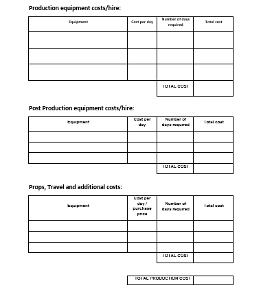
Budget production equipment costs – This ties into the finance side of things with it being an overview of any 3rd party expenditures that is an easy way to calculate budget and work out a possible profit efficiently. As mentioned previously, finance is a vital aspect of pre-production and this documentation keeps it simple.
Contingency plan – This is a more universal piece of documentation across a variety of media products. It’s essentially a plan B that will cover any possible issues or interferences with a shoot. In its rawest form it puts a ‘possible issue’ directly next to a ‘possible solution’ so everyone knows exactly what to do incase of an emergency. For example, poor foresight from The Sun editors victimised the police and villainised the fans of the Hillsborough disaster just to sell papers. Due to a lack of a contingency plan or any common sense the paper’s apology was dismissed by Liverpudlians and has never been sold in Liverpool since.
Crew call sheet – this acts as the documentation for the logistics aspect of pre-production, assisting in making the production run smoothly because everyone will know where they are at any time. Crew call sheets can be extremely long and tedious but are an effective way of rounding everyone up and making sure everyone’s on the same page.
Risk assessments – these are a big deal as they cover the production team in case of an accident and are often used for a wide variety of media productions – sometimes even smaller ordeals like school trips. In short, they will assess the risk of the environment you’re shooting in, solidifying everyone’s safety. It is a legal requirement. Below is a simple overlay of assessing the possible outcome of an accident and how to evaluate its severiority.
More documentation may include:
In conclusion:
There are a variety of formats of documentation for all different types of media productions that cover every inch of pre-production to allow for a product’s creation to move as efficiently and effectively as possible. Without formal documentation of every aspect of a media product it would fall apart; its function is obvious, to guarantee as much security in a massively risky business as possible. The effectiveness of documentation is so clear that I couldn’t find an example of an official media production failing due to a lack of formal form filling, so I’ll use the example of my year 8 school podcast. Lacking in any structure, crew or equipment booking sheets we regularly missed weeks and were so unorganised the entire afterschool club was shut down. This misuse of time and resources lead to a complete shutdown of the radio show from our studio executive. Ultimately, documentation is essential for a piece’s success, without it many of our favourite media products wouldn’t be around today and if some producers had decided to take more care with it we may have had more fan-favourite films, TV shows or even podcsts.
How can rules and laws make or break a Media project?
It’s regulation time!
Media is stuffed with regulatory requirements that act not just as rules but also guidelines to help assure everything is above-board and legal. While it may seem counterintuitive to put rules on art the codes and practises are critical to avoid being sued or fined massive amounts of money.
The official definition for regulation is:

How can you stick to the codes and practices?
There are so many different factors at play depending on where you are filming so let’s focus on trying to create a piece of creative digital media in the city of London. London is the third busiest city in the world for filming and there is a film or TV crew on the streets almost every day of the year, so sticking to the rules and regulations is vital as you don’t want to be a public liability in one of the busiest cities in the world. The official film London website brings up some of the regulations that need to be discussed. http://filmlondon.org.uk/filming_in_london/planning_your_shoot/legal
Minimum wage
As you are filming in the UK there are laws you have to abide about paying workers even if they’re just doing work experience. If you need more information about this to calculate your expenditure there’s some guidelines here. With the monumental demand for more video games in recent years many game developers have been overworked and underpaid, for example, poor budgeting in the California based game company TellTale lead to a collapse, leaving many unemployed and questioning their workers rights. Now developers get their national minimum wage as well as paid leave if wanted.
Statutory obligations
Filming on location is massively overcomplicated, with the countless pages of information on every little detail. For those curious here’s a file of all the minute missteps one might make. Here’s an image that sums up location filming in London:

Child performance licenses
Children in films are a bad idea. First of all, the acting is a hit or miss and an even worse headache when it comes to laws. If the child is in school you must ask to get time off or provide onsite education/boarding school. If the child isn’t from the UK then this raises even more issues about accommodation and hours of work. During the production of Matilda (1996) the 9-year-old star’s mum unfortunately passed away due to cancer. Because of this Danny DeVito and his then wife/costar Rhea Perlman took care of Mara making sure everything went swimmingly with production.
Media insurance
This must be dealt with as early into production as possible as all UK productions need Public Liability Insurance in order to receive permission to film or carry out commercial photography. This will cover any injuries on set or any damage to 3rd party equipment. This insurance policy is only relevant if you follow the health and safety guidelines. For a London shoot this will cost you the low low price of £2 million and even £5 million in certain locations, however, for students this should be covered by their college or university.
Filming people/buildings
There is no particular English rule about image rights however, a general rule of thumb is to ask for consent of anyone unintentionally in the image. If a person does not give permission it is critical you find a way to remove or obscure them from the final product to avoid lawsuits. Similarly, certain buildings in London require special permission to film because under the Designs and Patents Act of 1988 buildings are considered copyrightable – you may not even be able to recreate them using VFX or matte paintings.
How to avoid issues like these in pre-production
In conclusion
A failure to follow the rules and regulations of a media product can lead to injuries or unnecessary risk which can easily be avoided by following the codes of practice during the pre-production phase. Ultimately, the production of a creative digital media production does not put you above the law so it is important that no matter how low budget you are adherence to the rules is not only vital but also essential. On the other hand, films like This Is Not A Film decided to go against the laws of their country to purposefully create a piece of art that landed the director in jail for espionage. Overall, in my opinion adherence to the rules and regulations is effective in the pre-production phase as it keeps a media product in check and lawful, however, the codes and practices can also stunt art, my advice (which should be taken with a grain of salt) is to shoot what you want to include in your piece regardless of minor inconveniences.
Introduction
Finance is critical for the success of a film; if managed poorly, it can stunt the development of a project or even cancel it entirely. There are many ways pre-production can avoid these issues which some producers and directors elected to ignore, putting them through development hell and extreme loss of profit. If a media product can’t turn a profit then it hasn’t achieved its goal, so a director should always be balancing income and outcome to project whether the production is worth the loss. Overall, money drives media, if it had been handled wrong many of the media products we know and love wouldn’t exist.
The benefits of finance orientated pre-production
By calculating the exact amount, you will need you can display your estimated profits clearer.
Production will run smoothly as it’s one less thing to worry about.
You can show the studio where all their money is going, which can help keep the production alive.
Or if you don’t have a studio yet a clear estimation of the necessary money can help get producers on board.
Where does finance come into pre-production?
The first thing you want to do, money-wise, when it comes to pre-production is to calculate how much money will be needed, allowing for studios to see roughly what budget your production will be. Media is a high-risk high-reward industry so by estimating the budget it can reduce the risk and make it seem like a sounder investment. However, many films, TV shows and even adverts have gone over budget putting studios into debt and destroying their own production. Another way it can help is like I mentioned earlier, a tight focus on finance can make a production run smoothly. For example, when director Alfonso Cuarón took over from Chris Columbus on Harry Potter’s 3rd instalment he decided to relocate Hagrid’s Hut to a location that better fit the books. However, they not only didn’t consider the weather but they also forgot to consider money ultimately causing a loss in money. This oversight is a mistake you must avoid because it may not have been consequential for a giant block buster but for an indie film on a much smaller budget it could demolish a production. Overall, good foresight of where your money is going can lead to greater investments from studio executives and a smoother production, avoiding what happened on Prisoner of Azkaban.
Examples of good/bad finance and how they got money:
With money being a deciding factor into whether a media product is good or not it’s important you know where to get it. There are several ways you can fund a production but through all of them you must remain diligent as to where expenditure is going. For example: if you are approached by your local council to create a poster for their new project, you must take into account how much he software will cost, avoiding copyright infringements and the cost of renting photography equipment. Depending on the media product the cost varies, with big audio-visual productions costing a lot more than magazine covers and giant music videos dominating in expenditure over the cost of the music itself. So, for your production you need to consider where the money’s coming from. Here are some examples:
Local authorities – a good way of getting funding is through your local council who have the funds available for organisations or projects that seek to enhance community engagement and cultural benefits. In a BBC article in 2018 a study was conducted revealing that adverts on council sites can boost income by £34,500 so it’s a great place to start! If you want to know more about local funding in your area enter your postcode on this search page on GOV.UK or contact your local authority directly to find out more.
Crowdfunding – another good way of getting the money to create a project is by using sites like Crowdfunder, Kickstarter or GoFundMe, where you can advertise your idea to people who might want to invest. These rely on a good pitch and a concise summary which shows it is a worthy investment. This is a great example of how calculating the estimated budget is critical as you need a goal to reach.
The BFI – a major initiative developed by the BFI to help fund independent British films. There are a variety of ‘hubs’ around the UK which offer support and funding to independent films. The BFI is not only a great place to get funding but also a brilliant platform to get your film seen.

In Conclusion
Finance is such a critical part of Pre-production that it can make or break a project. In my opinion, if a production can’t handle a budget or estimate their expenditure then they shouldn’t be allowed to control future projects as it’s a gross misuse of money. For example, Apocalypse Now is often regarded as one of the best films of the past century, however, their carless nature towards money lead to more worry than necessary. Doug Claybourne was brought in as production assistant. As a Vietnam vet, he was one of maybe two or three people working on the movie who had actually been involved in the war. “At the hotel where the crew were based, it was party heaven. We’d have a hundred beers lined up around the swimming pool. There were people diving off the roofs, it was crazy.” This is especially concerning if a production is crowdfunded because it looks although the investor’s money was just going into leisure. The overall rule of thumb is, if a production can handle its finance it can make a profit and if it doesn’t… well you better hope it’s the next Apocalypse Now.
Who? What? When? Where? And Why?
Logistics is organising every minute detail of a production so every possible problem has a solution and production can move as smooth as possible. Logistics is, in my opinion, the hardest part of pre-production as you have to consider every possible outcome and take into account all the pitfalls your project may fall into. Poor logistics leads to a more dangerous set which causes issues with health and safety and damage control, ultimately culminating in a loss of money or even life. Even when a project is as basic as a shoot for a magazine cover it’s important to take into account: what days the model can do; what they should do (i.e. use of and props/positions); how long they will be there; where it’ll be and the purpose of the shoot.
Breaking down logistics:
Who?
Logistics are often used to look at how two actors may interact on set. Lot’s of the time, big personalities meeting behind scenes can lead to disaster so logistics are important for keeping the peace. But more importantly, it’s organising the whereabouts of everyone at all times so that all of the crew knows their hours. This can be difficult, especially if not everyone has been casted yet or if equipment companies need to be called as everything is uncertain, however, it is critical that it is done or accidents will occur and people will get hurt or be in the wrong place at the wrong time.
What?
It’s important that in the pre-production phase you are often considering what you want the outcome to be and what the possible issues are that may need contingency plans. Contingency plans are essentially plan Bs incase an actor is late or some equipment hasn’t arrived, which can help move a production along swiftly. During the production of the TV show Titans a special effects coordinator was killed by some loose shrapnel from a car in a stunt. The production was closed for 2 days but due to countless contingency plans and some flawless logistical planning it started again and was completed before the deadline. The first episode featured a tribute to Warren Appleby and special measures were taken to help his family.

When?
Every member of the crew must be seen as human beings who have a life outside of the production so it is of the uttermost importance you plan out dates and times to a T. The daily plan for the production of Harry Potter: Prisoner of Azkaban featured a massive timetable of where people will be and when, with details as minute as the length of time it’d take a taxi to get from Daniel Radcliffe’s hotel to the set. This level of precision guarantees a painless, stress-free production that is not only efficient but also enjoyable.
Where?
Similarly it’s important you know where everyone will be at all times to maximise productivity. A careless crew is a dangerous one so having control over that can reduce possible damage to property and lives.
Why?
It’s easy to question the necessity of logistics as they seem to be the pinnacle of pedanticism but they are critical for reducing accidents and meeting deadlines. Often studios will want to know anything and everything about a production so this is the best way of keeping them happy. Logistics have been around since the birth of film with one of the first incidents happening on Across The Border in which 16-year-old cast member Grace McHugh was on a boat crossing the Arkansas River when they suddenly capsized.the camera operator (Owen Carter) immediately jumped in pulling her to safety. Unfortunately, the river bank was quicksand so the crew had to helplessly watch as the two slowly sunk into the sandbar where they drowned.
How to be logistic:
The first thing you should do before beginning production is flesh out all the possible things that could go wrong. This is easier said than done because there’s no way of predicting radical weather or sandbank quicksand but it is still important to plan out all the smaller details that are arguably just as important. Work through it bit by bit and have a solid plan with no room for error to reduce the chance of any issues occurring. During the production of Lawrence of Arabia the actor Peter O’Toole almost died falling off a camel and then broke his thumb drunkenly punching through a caravan window, so as long as you have a strong plan and contingency plans to go with it you should avoid messy production.
In Conclusion:
Logistics are vital to a productions success, assisting in the reduction of continuity errors and maintaining a safe set during filming. In other forms of media it’s just as important if not more important. For the creation of an advert you must take into account so many varying details to make it as entertaining as possible. Logistics may seem over the top or too much work but they do directly correlate to the success of a project. Logistics keep everyone in order and on time allowing for a smooth production and less risk. Some media projects require more planning than others, for example the longest film ever made ‘Logistics’ should’ve been a daunting task with 51,420 min to fill but no it was relatively straight forward. In my opinion it is one of the most important aspects of pre-production but often times films can be successful without it, take ‘Logistics’ for example, it’s rejection to do logistics landed it a 5.5/10 on IMDb, compared to Harry Potter: The Prisoner of Azkaban’s 7.9.




 Pre-Production